History of Halebidu Temple
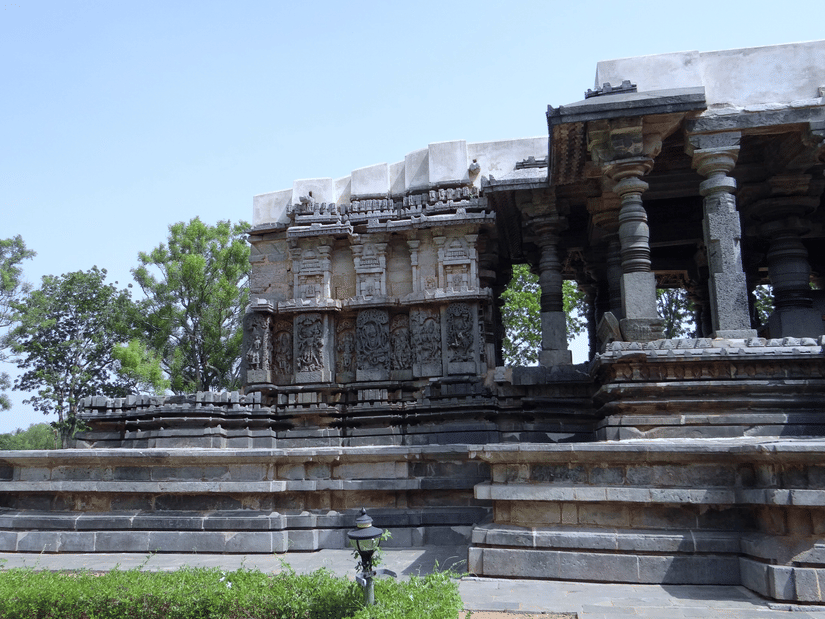
Construction of the Hoysaleswara Temple began in 1121 CE during the reign of King Vishnuvardhana. While the main structure was largely functional by 1160 CE, it is often described as 'unfinished' because its crowning towers (shikharas) were never completed. Halebidu, originally known as Dorasamudra, served as the illustrious capital of the Hoysala Empire after succeeding Belur.
The temple was carved from chloritic schist (soapstone), a material prized by Hoysala master craftsmen for its initial softness, which allowed for microscopic detail before hardening into durable stone. Along with the temples at Belur and Somanathapura, it was inscribed in 2023 as a UNESCO World Heritage Site under the title “Sacred Ensembles of the Hoysalas,” in recognition of its outstanding architectural and artistic achievements.
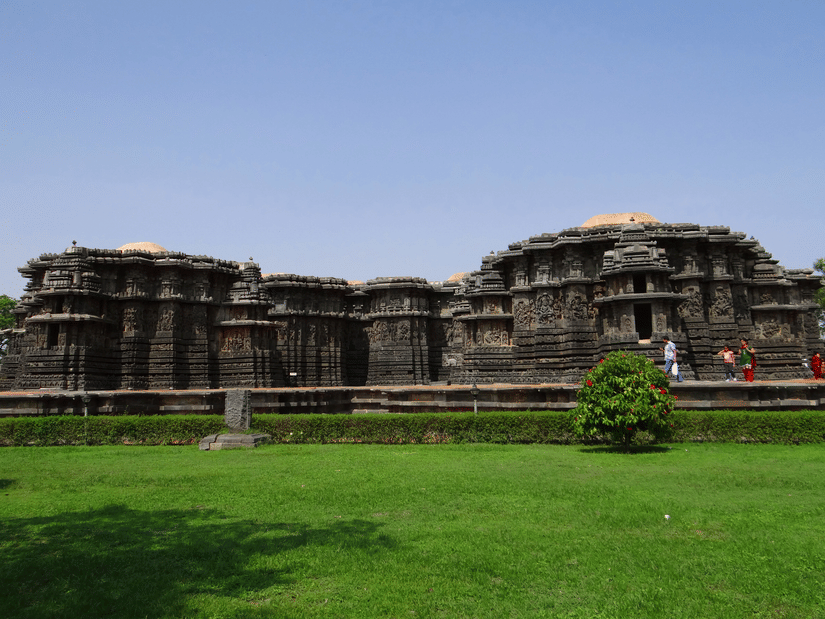
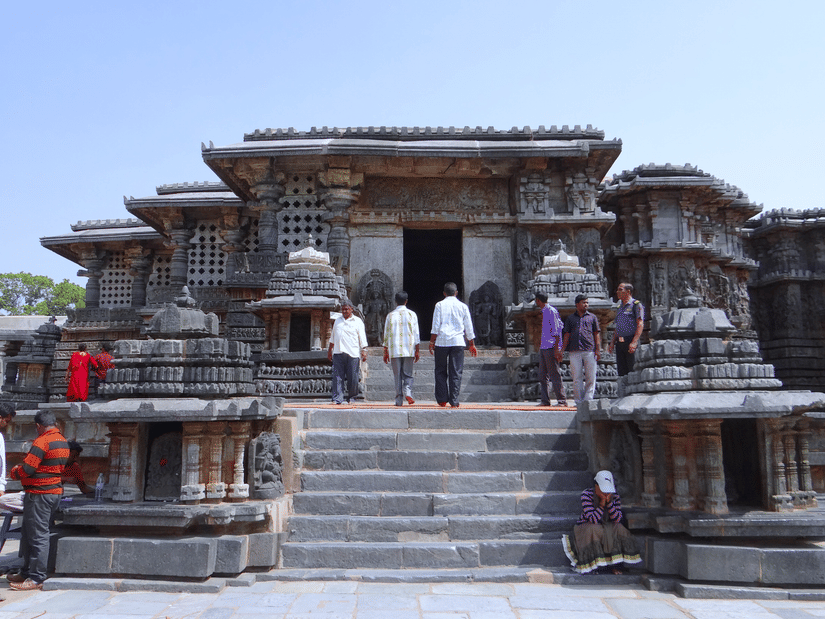
Cultural Significance of Hoysaleswara Temple, Halebidu
As a masterpiece of pluralistic expression, the temple stands as a stone-carved testament to an era of religious and artistic harmony. While the twin shrines are dedicated to Lord Shiva (as Hoysaleswara and Shantaleswara), the complex reverentially incorporates iconography from Vaishnavism, Shaktism, and Jainism.
The nearby Jain Basadi complex—comprising temples for Parshvanatha, Shantinatha, and Adinatha—features monolithic statues and mirror-polished lathe-turned pillars that highlight the prominence of Jainism within the Hoysala court. Together, these monuments serve as a lithic encyclopedia, documenting the social life, spiritual diversity, and unparalleled artistic achievements of 12th-century South India.
Architecture: What to Look For?
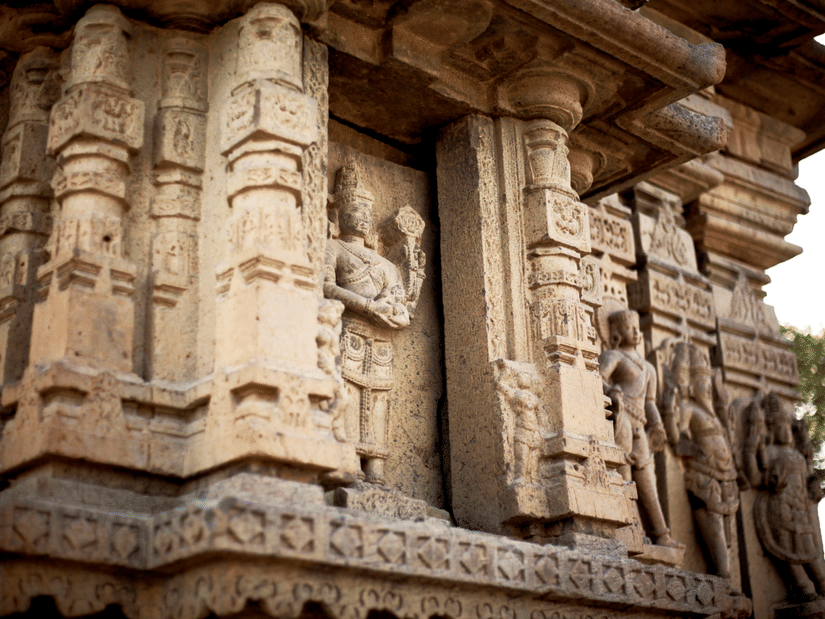
The Halebidu Temple is world-renowned for its intricate exterior friezes and richly carved pillars. To truly appreciate the artistry, we recommend a slow, deliberate walk around the perimeter to witness:
- Epic Narratives: Layered bands of carvings depicting scenes from the Ramayana, Mahabharata, and stories of Krishna from the Bhagavata Purana.
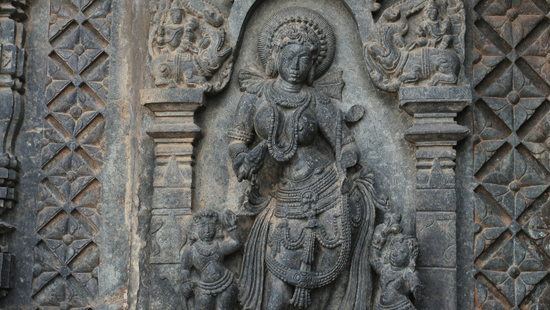
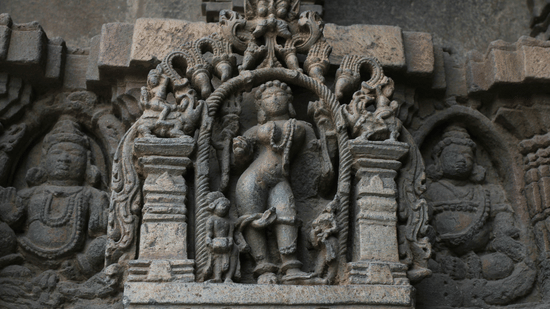
- Divine Figures: Meticulously detailed statues of Shiva, Parvati, Krishna, Vishnu, celestial dancers, and Yalis (mythical lion-like creatures).
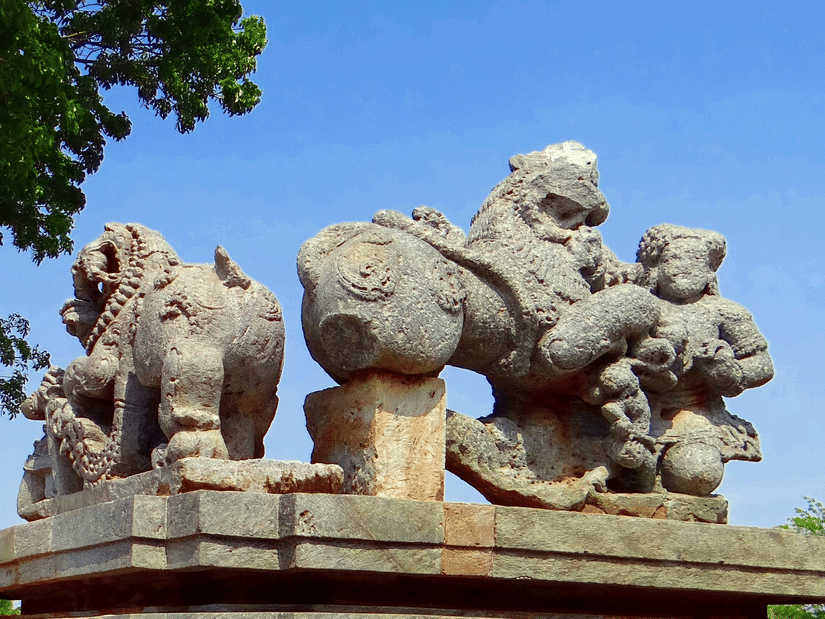
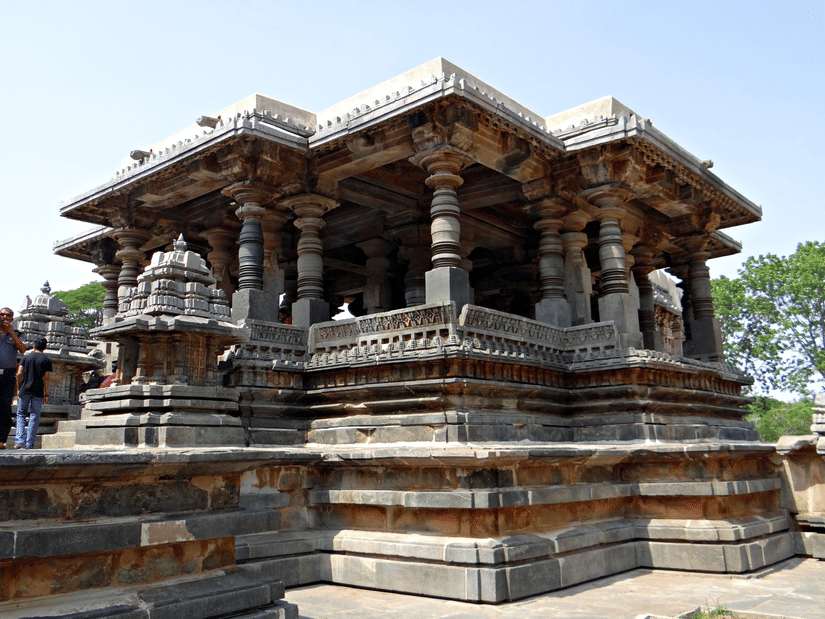
- Signature Stonework: The 'hidden' depth of the soapstone carvings, a hallmark of the Hoysala style.
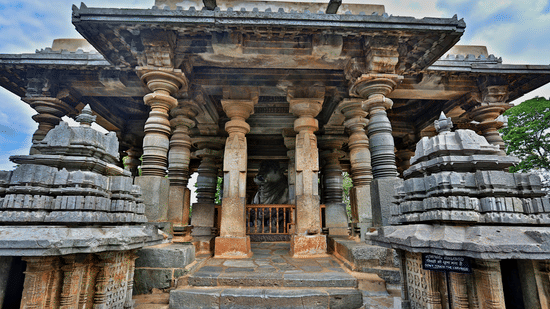
- Interior Brilliance: Polished 108 lathe-turned pillars, each intricately carved with symmetrical motifs and exquisite detail, supporting the expansive star-shaped ceilings of the inner mantapa.
- Pro Tip: Hiring a local guide is highly recommended to help decode the complex iconography and mythological sequences, making your visit truly meaningful.
Iconic Monuments of the Halebidu Circuit
Halebidu makes itinerary planning effortless because several iconic monuments sit approximately 3 km from each other. Enhance your trip by visiting:
- Kedareshwara Temple: A hidden gem featuring star-shaped architecture.
- Jain Basadi Complex: 3 temples dedicated to Parshvanatha, Shantinatha, and Adinatha.
- Hulikere Stepwell (Kalyani): A quiet, reflective spot perfect for a final stop before heading to your resort.
Plan Your Visit: Timing, Travel, and Etiquette
Planning a smooth and respectful visit is easy with these practical details::
- How to Reach: A 35 km drive via Belur Road and NH73 from Chikmagalur.
- Temple Timings: The temple is open to the public daily, typically from 6:30 AM to 9:00 PM.
- Best Time to Visit: The months of October to February offer the most pleasant weather for outdoor exploration.
- Photography Tips: Visit in the early morning for soft, natural light that beautifully defines the carving depth.
- Dress Etiquette: As a sacred site, modest clothing is always recommended.
- Footwear Savvy: Please remember to remove your shoes before stepping into the temple sanctum, a traditional practice observed at this sacred site. Wear comfortable socks if the stone floors feel too warm or cool for your feet.
- Timing is Everything: Aim to arrive between 7:00 AM and 8:00 AM. The morning sun hits the eastern face of the temple, creating the perfect shadows to see the 'hidden' details in the stone friezes.
- Hydration & Sun Protection: While the temple interior is cool, the perimeter walk is unsheltered. Bring a hat, a reusable water bottle, and sunscreen.
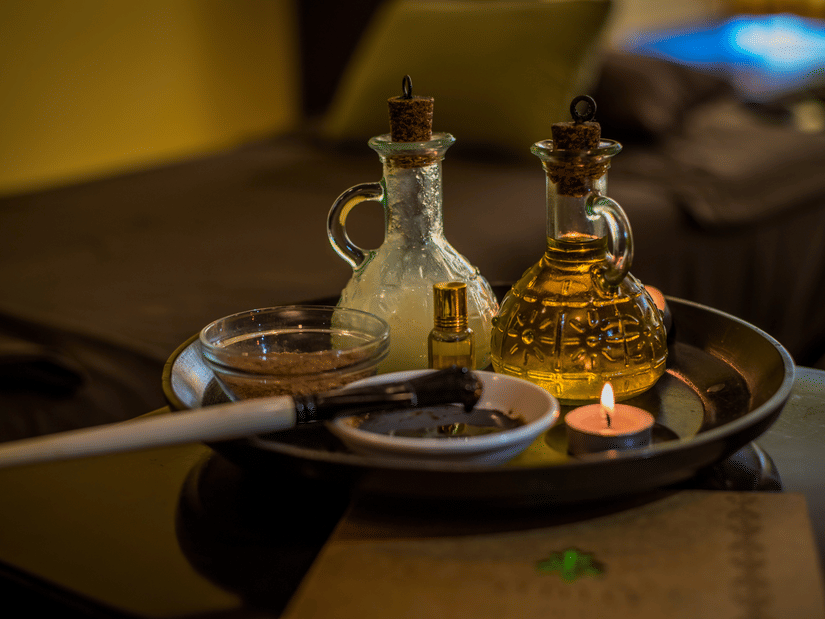
- The Serai Reset: Book your Oma Spa session in advance. There is no better way to reflect on the day’s history than with a signature coffee-infused treatment.
Your Gateway to Hoysala Heritage: Stay at The Serai Chikmagalur
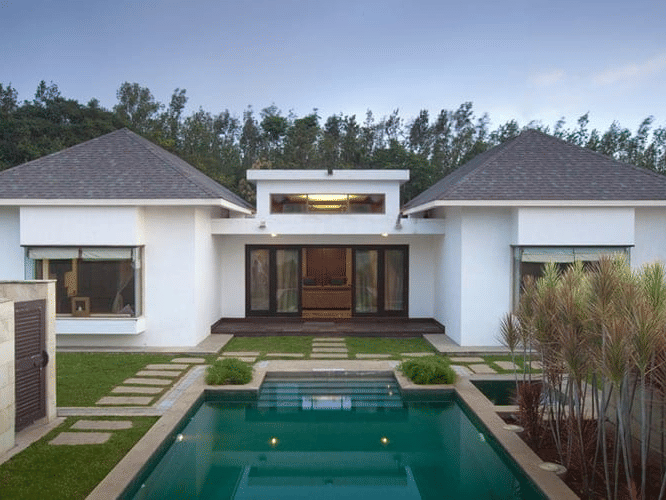
Complement your heritage tour with a luxury reset at The Serai Chikmagalur, a serene plantation retreat. Nestled within the confines of nature in Chikmagalur, the resort offers a polished balance after your temple visit through:
- Exclusive Accommodations: The resort features 29 private villas, including select accommodations with personal jacuzzis/private pools for ultimate relaxation.
- Fine Dining: Gourmet experiences at The Odyssey and creative cocktails at The Blue Sky Lounge.
- Holistic Wellness: Rejuvenating, therapeutic spa treatments at Oma Spa.
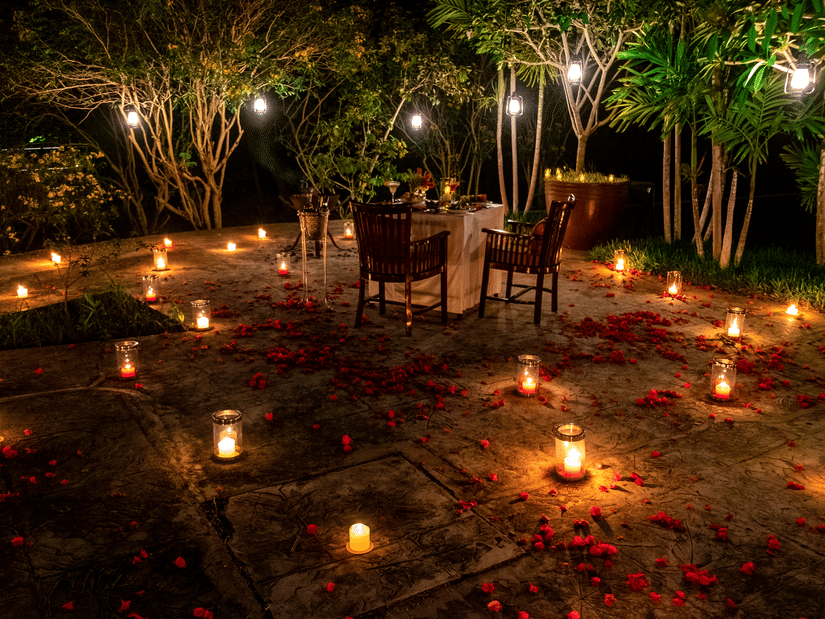
- Nature Experiences:Immersive plantation walks, romantic candlelit dinners by nature, and quiet downtime in the lush estate.
- Cultural Experience: Hoysala Temples tour with an experienced guide.
- Nearby Attractions: Hoysaleswara Temple, Halebidu (approximately 42 km), Baba Budangiri Hill Peak (approximately 40 km), and Chennakesava Temple (approximately 33 km).